Exploring the Pacific School of Innovation & Inquiry

I recently toured the Pacific School of Innovation & Inquiry (PSII), and it proved to be a truly eye-opening experience. The funny thing is, I have lived right across the street for two years and had no idea there was a high school there. I always assumed it was some college. I was excited to check it out and learn more about how the school works.

What stood out the most was the focus on inquiry-based learning. Instead of splitting knowledge into strict subjects, students explore ideas in a more holistic way, often connected to real-life situations. It encourages deeper understanding, critical thinking, and adaptability. Students really get the chance to look at ideas from all angles and become well-rounded thinkers.

The principal really impressed me. He was so passionate about the school and clearly believed in the vision. I loved that he just went for it and made this idea happen. It takes a lot of courage to do that, and his energy made the school feel really inspiring.

I also loved how students are encouraged to take charge of their own learning. They get to explore what they are genuinely curious about and are involved in every step of the process. The relationships between teachers and students seemed really strong. It felt like everyone learns from each other instead of it just being a one-way street.

Of course, I left with some thoughts. PSII is a really small school, with about 120 students. That makes it easier to build those close relationships, but I wonder if it works on a larger scale. I also wonder if this approach works for every type of learner. Students need to be self-motivated, creative, and able to follow through on their own questions for inquiry to work. From my experience as an Educational Assistant, I know some students, especially those who struggle with executive functioning, might find it hard to start and finish big projects or settle on a single idea.

I also thought about the social side. With such a small school, students might miss out on some opportunities that bigger schools offer, like sports teams or a variety of clubs. For me, high school was really about socializing and being involved in extra activities, so this kind of learning environment probably would not have been the best fit. But I can see how it could be amazing for some students who thrive in this style.

Overall, PSII is a fascinating example of what school could look like when curiosity and student choice are put at the centre. It might not be for everyone, but the focus on inquiry, holistic learning, and strong relationships makes it a really interesting alternative to traditional education.
Tuscan Gnocchi: Expanding my Italian Cooking Horizons

Tuscan Gnocchi: Expanding My Italian Cooking Horizons

My first new recipe for the blog is Tuscan Gnocchi, and I am so excited to share it. I have always loved Italian food, but when cooking at home, I usually gravitate toward classic pasta dishes rather than gnocchi. Because gnocchi is something I am less familiar with, I wanted to challenge myself and expand my Italian cooking horizons with this recipe.

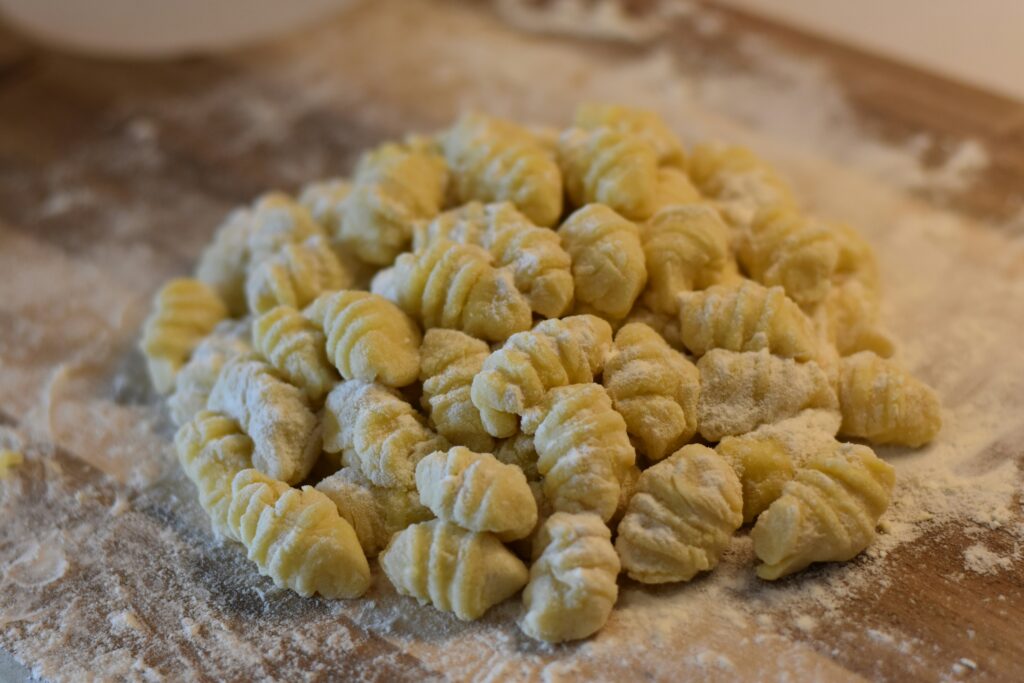
Photo by Gábor Molnár on Unsplash

A Brief History of Gnocchi

Gnocchi is a traditional Italian dish that originated in the northern regions of Italy. While its exact origins are unclear, it is believed to date back to the Middle Ages. During this time, peasants relied on simple and affordable ingredients to create filling meals.

The name gnocchi comes from the Italian word “nocca,” which means knuckle. This refers to the small, dumpling-like shape of gnocchi. Over time, the dish became a staple in Italian cuisine, with different regions developing their own unique variations and recipes.

Potatoes played a crucial role in the development of gnocchi. Before potatoes were introduced to Italy in the 16th century, gnocchi-like dishes were made using ingredients such as bread, polenta, or turnips. Once potatoes arrived, they quickly became popular because they were inexpensive, abundant, and nutritious. The dish became so closely associated with potatoes that it was often referred to as gnocchi di patate. To this day, potatoes remain a fundamental ingredient in traditional gnocchi recipes, particularly in Northern Italy.

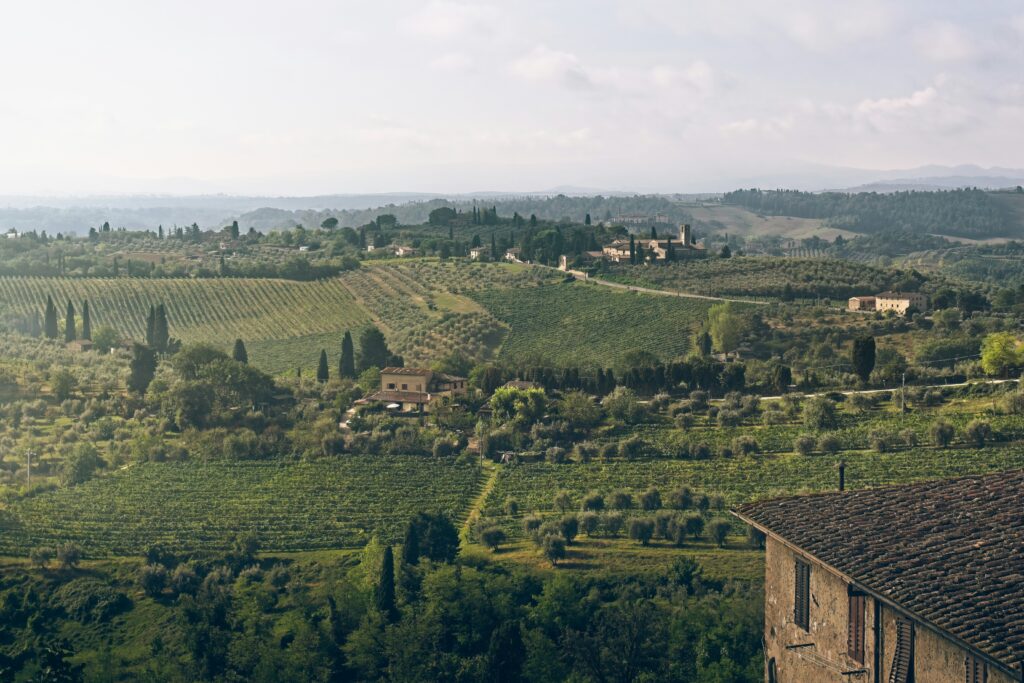
Photo by Arthur Hinton on Unsplash

Dinner, Wine, and Good Company

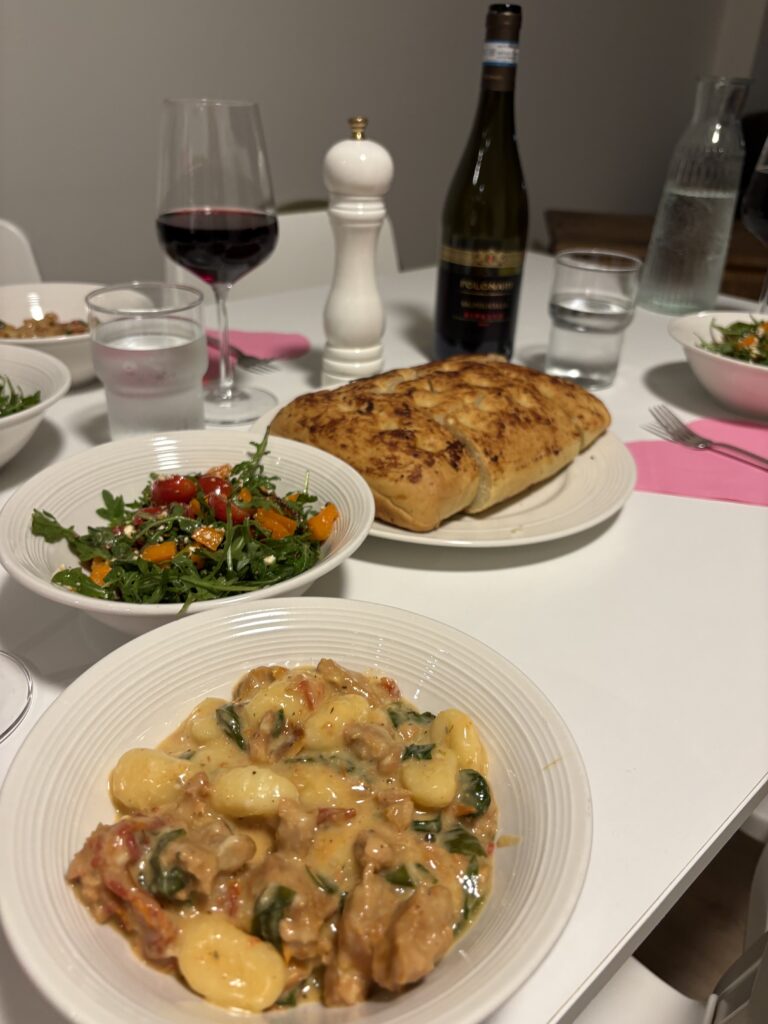
For this meal, I invited my classmate Liz over to share dinner with me. Liz is working on her inquiry project about wine culture and brought an Italian red to pair with the meal. Liz picked a delicious red wine from the Veneto region. It was full of flavour and paired beautifully with the gnocchi. The wine was smooth and rich, with notes of berries and spice. I enjoyed it so much that I would definitely purchase it again. To learn more about the wine Liz brought, find it on her blog!

To accompany the gnocchi, I made an arugula salad with a shallot dressing and served it alongside focaccia bread. I love pairing a rich and creamy pasta dish with something fresh because it helps balance the overall meal.

Ending on a Sweet Note

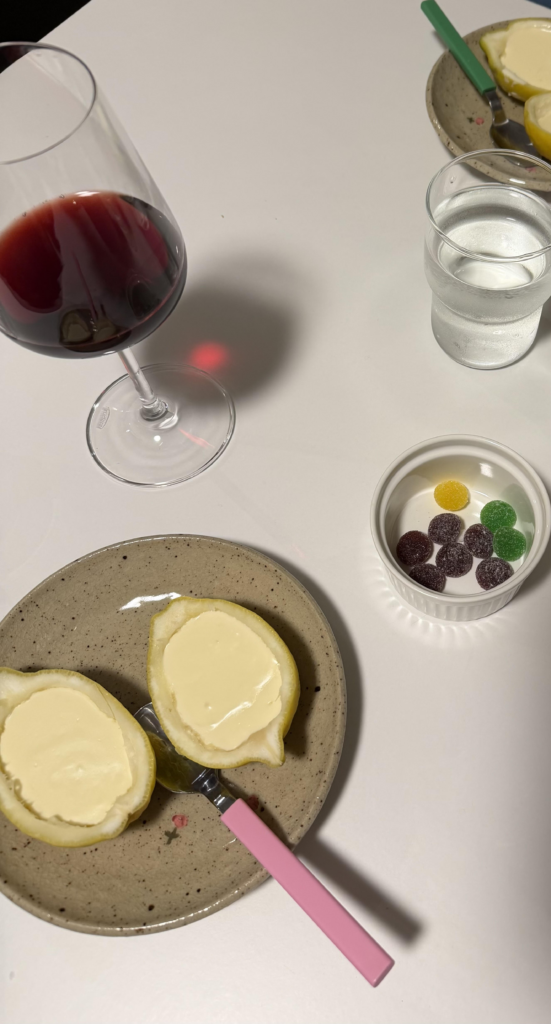
To finish the meal, I made lemon possets, which felt like the perfect dessert to complement an Italian-inspired dinner. I have made these possets before, and they are always a hit. They are delicious, simple, and aesthetically pleasing.

The most challenging part of the recipe is hollowing out the lemons to use as serving cups. While it is possible to serve the possets in small bowls instead, using the lemons adds to the overall presentation. Another important step is allowing enough time for the dessert to chill and set in the fridge. For this meal, I prepared the possets the night before, which worked perfectly and left my fridge smelling like fresh lemons.

Final Thoughts on the Recipe

Overall, I found the Tuscan gnocchi recipe easy to follow, and the final result was delicious. The dish was creamy and rich, while the sun-dried tomatoes added a strong and balanced flavour. I used spicy Italian sausage, which added the perfect amount of heat to the meal. Everything came together quickly, made enough food for three people. It is a dish I would happily make again.

What I Loved About This Recipe

• It was quick and simple to make
• It was full of flavour
• It is easy to adapt for different dietary needs, since the base recipe is vegan and can be made gluten-free with the right gnocchi

Things I Changed

• I cooked the gnocchi and the sausage in separate pans and added the sausage at the end so I could cook it until perfectly crisp, even though it meant a bit more cleanup
• I used regular Parmesan instead of a vegan alternative since I already had it in my fridge and eat dairy

This is a recipe I will definitely be keeping and making again in the future.

Preparing to Teach in the AI World

As a future teacher, I am starting to realize that planning lessons can be harder than it looks. Figuring out how to break a unit into daily lessons and how long things will actually take can be tricky. That is where AI has been really helpful for me. I like using it to get ideas for pacing and to check whether my lessons support all types of learners. I can ask it to suggest sports where students may need extra help or ways to challenge students who are ready to move ahead. It helps me make my lessons more inclusive and make sure no one gets left behind. 

Even though AI is helpful, I do not think it should create full unit plans for teachers. AI can be wrong, and it does not know your classroom, your students, or your teaching style. Planning lessons still needs a human touch. I also do not think AI should be used for grading. Part of teaching is knowing what you taught, what you expected students to learn, and how each student is growing. That understanding comes from being in the room with your students, something AI cannot replace.

For Students, AI can be a really useful tool. It can take difficult concepts and explain them in ways that make more sense for students. I have seen students use AI to get explanations that click for them that weren’t given in class. AI can also help students organize large projects, break assignments into steps, and brainstorm ideas. 

The problem comes when students rely on AI to do all the work for them. I have seen students copy and paste essay questions into AI and submit the answers as their own with no research into the question. When this happens, students are not learning the topic or practicing important skills like writing, thinking critically, and forming their own ideas. I worry that using AI too much could reduce creativity and independent thinking. 

As AI becomes a bigger part of our world, one of the most important skills we can teach students is how and when to use it responsibly. Understanding digital literacy and seeing AI as a tool rather than a replacement will help students use it to support their learning without losing their own skills and ideas.

Cooking, Learning, and Sharing

For my inquiry project, I plan to make a new recipe every week to expand my cooking knowledge. I already love to cook, but I often find myself going back to the same recipes over and over again. By trying something new each week, I hope to push myself to take more risks in the kitchen and discover new meals and techniques. 

I also notice that when I try a new recipe,  I sometimes forget the changes I made or the notes I thought of while cooking. By creating weekly posts, I will have a place to write down my adjustments, such as changing ingredients, cooking time, or preparation steps. Many recipes underestimate prep time, and since I’m a slow vegetable cutter, it usually takes me way longer than expected. Writing these notes will help me remember what worked and make it easier to remake recipes in the future. 

I love to cook and share food because I find it a great way to connect with people. Seeing my friends and family enjoy something I have made brings me a lot of joy. I hope to share some of these meals with the people I care about and hear their opinions. During this busy season of life, while balancing school and work, these moments around a good meal help brighten my days. 

Another part of my inquiry project will be learning about the story or culture behind each recipe. As a future Social Studies teacher, I find it really interesting to learn where things come from. For example, next week I plan to make a variation of gingerbread cookies for a weekend trip with my family, and I hope to research how gingerbread cookies became so popular. Being able to share these facts along with my food will add meaning to the experience. 

I will use different types of media to find new recipes, including Pinterest, TikTok, Instagram, and cookbooks. With so many ways to discover food today, this project will give me the chance to explore new ideas while doing something I love!

Using Different Media to Enhance Lessons

I plan to teach Social Studies for grades 9 to 12, and I think there are many great ways to use video and audio as assignment mediums. Almost any project in Social Studies can be turned into an opportunity for students to create podcasts, slideshows with voiceovers, short documentaries, or even interactive videos. I would let students choose the format that works best for them, which gives them more ownership over their learning and allows them to showcase their strengths. 

For example, in a unit I designed about the Holocaust, my final project was to get students to make a digital story following the life of someone who lived through that time. The goal was for students to show what they learned over the two-week unit and present their knowledge in any way they wanted. 

To make these assignments engaging, I would provide one or two lessons on basic video and audio editing and introduce different tools that students can use. I would make it clear that the goal is not professional-level editing but practicing skills, experimenting, and expressing ideas creatively. Giving students the freedom to make choices about their project encourages them to take risks, problem-solve, and think creatively as they plan, edit, and refine their work. 

Video editing connects closely to the B.C. Creative Thinking competency which requires students to come up with original ideas and figure out how to turn them into something meaningful. They get to make decisions about images, sound, and pacing, and they experiment and solve problems. Students get to reflect on their work and make improvements along the way. This process helps them build flexibility, confidence, digital literacy, and critical thinking skills. 

Using video or audio also aligns with Universal Design for Learning (UDL), which focuses on creating learning experiences that work for all students. By providing multiple ways to express understanding, students who might struggle with writing have the chance to communicate through visual, audio, and storytelling. UDL also encourages giving students choice, allowing them to work in ways that match their strengths and interests.

Reimagining Education

I believe that education needs to be reimagined, especially as technology continues to change how we live and work rapidly. Even though I know education must change, it is easy to fall back on the way I was taught when thinking about how I want to be an educator. It can be challenging to determine how to change education within a system that often feels stuck and outdated.

In the video Most Likely to Succeed, which we watched for class, I appreciated how clearly the historical information of the education system was explained. As a Social Studies teacher candidate who enjoys learning about history and its impact on society today, this was especially interesting to me. The video showed that much of our education system was designed to prepare students for jobs that were relevant at the time. Today, we live in a vastly different world, and students need to be prepared for a rapidly changing job market. 

While I admired many aspects of High Tech High, the school featured in the video, it also raised some important questions. Several classmates and I were wondering how students from this school would adjust to university. I appreciated the emphasis on teamwork and student-led learning, and I would have liked to see follow-up stories about graduates to better understand the long-term impact of this approach. Many of the strategies shown, such as the Socratic seminar, would work especially well in Social Studies classes by encouraging student-led discussions. During our breakout room discussion, a science teacher candidate pointed out that science learning was largely absent from the video. The students did not appear to spend much time in science labs, which could be a disadvantage for those who want to pursue science-related programs in university. This made me reflect on how difficult it might be to fit a model like High Tech High into a society where university remains a common goal for many students. While university is not the only purpose of completing high school, the way our education system is currently structured encourages many students to see university as the primary pathway to a career. For a school model like this to work effectively, a complete rethinking of education would be needed, beginning in kindergarten and continuing through to post-secondary education, for these ideals to flourish. 

The video also highlighted how many students felt overwhelmed when they entered high school and encountered a completely different approach to learning. I believe skills like teamwork and social responsibility are very important skills to learn, but in my opinion, they should be introduced at a younger age. In Denmark, education places a strong emphasis on life skills and being an active, responsible member of society. Their system has moved away from memorization and heavy testing. Teaching these values early would help students succeed throughout their schooling and prepare them to be effective collaborators in future careers. Starting early also prevents students from having to study and change how they see themselves as learners during their teenage years. 

One of the greatest challenges for teachers is figuring out how to adjust their teaching within a system that is slow to change. In the TED Talk I found, the speaker explained that transforming the entire education system would take significant time and effort. However, she also emphasized that meaningful change can begin with small steps at the school or classroom level. I strongly connected with her ideas of student-centered learning, where students take greater responsibility for their education. This approach allows teachers to make impactful changes without needing to completely redesign their courses. 

As I move through this program, I am beginning to see new policies and ideas that make me excited about the future of teaching. In B.C., education is placing a stronger emphasis on student responsibility and meaningful feedback. Students are given time to work with teachers and take an active role in constructing their own learning. Parents are more involved and are able to see where their children stand on their path toward graduation. All of these changes are moving education toward a more student-led learning and greater student responsibility. This gives me hope for the future of education.