
Coding
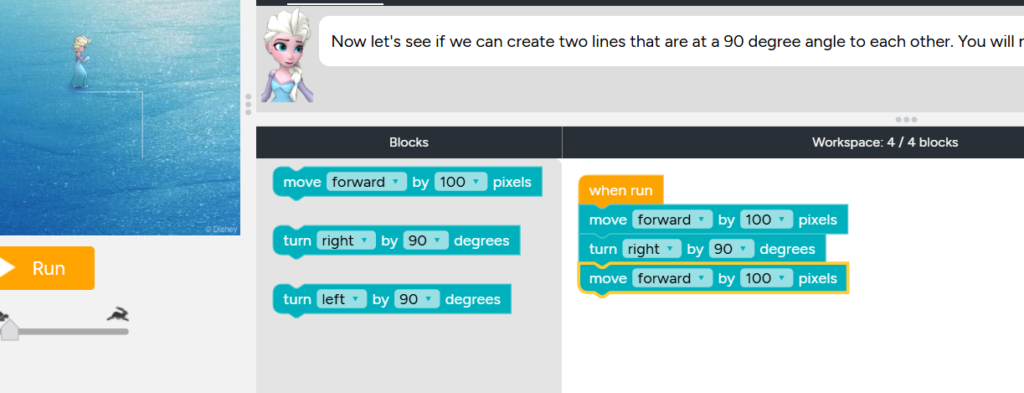
I have seen firsthand how bringing coding into the classroom can be incredibly useful. I work as an educational assistant for a family that homeschools, and one of the subjects I help with is their computer class. For this class, the students take an online coding program that uses Scratch.
It has been amazing to watch how excited the students get when they start building their own games. The program gives them the freedom to be creative while still following structured instructions. They love experimenting with different ideas and seeing their code turn into something they can actually play.
I have also noticed how much their computer skills have improved. Coding has expanded their understanding of how computers work, and it has even strengthened their typing skills, since they often have to type code. These students already love playing video and board games, so the coding class connects something they enjoy with meaningful learning. With so many careers becoming connected to technology and the digital world, I think it’s great that they are developing these skills as part of their regular school schedule.
Computational Thinking
Computational thinking is often broken down into four main parts, and it provides a helpful way to approach complex questions and problems. The first step is decomposition, which means breaking a large or complicated issue into smaller, more manageable parts. This happens frequently in Social Studies. For example, when studying World War II, we need to break the war into many smaller topics, such as its causes, major events, and consequences, in order to understand its global impact fully.
The next step is pattern recognition, which involves identifying trends or similarities across different events. In Social Studies, students often look for patterns when comparing historical events. For example, many revolutions share similar causes, such as economic inequality, political dissatisfaction, or social unrest.
The third step is abstraction, which means focusing on the most important information while setting aside less relevant details. This is a particularly important skill in Social Studies because many topics are very broad. Using World War II again as an example, students need to understand the main ideas of the war and the key people involved, such as Adolf Hitler, rather than memorizing every individual battle. Abstraction helps students process large amounts of information without becoming overwhelmed.
The final step is algorithmic thinking, which involves organizing information into clear, step-by-step processes. Historical events often follow sequences that can be mapped out logically. For example, the start of World War II can be understood through a series of steps, including Adolf Hitler gaining power in Germany and the invasion of Poland in 1939.
Computational thinking can be a powerful tool in Social Studies because it helps students break down complex historical issues into smaller, more understandable parts. By organizing information, identifying patterns, and focusing on key ideas, students can develop a deeper understanding of the past. It is definitely an approach I hope to incorporate into my own classroom in the future.